


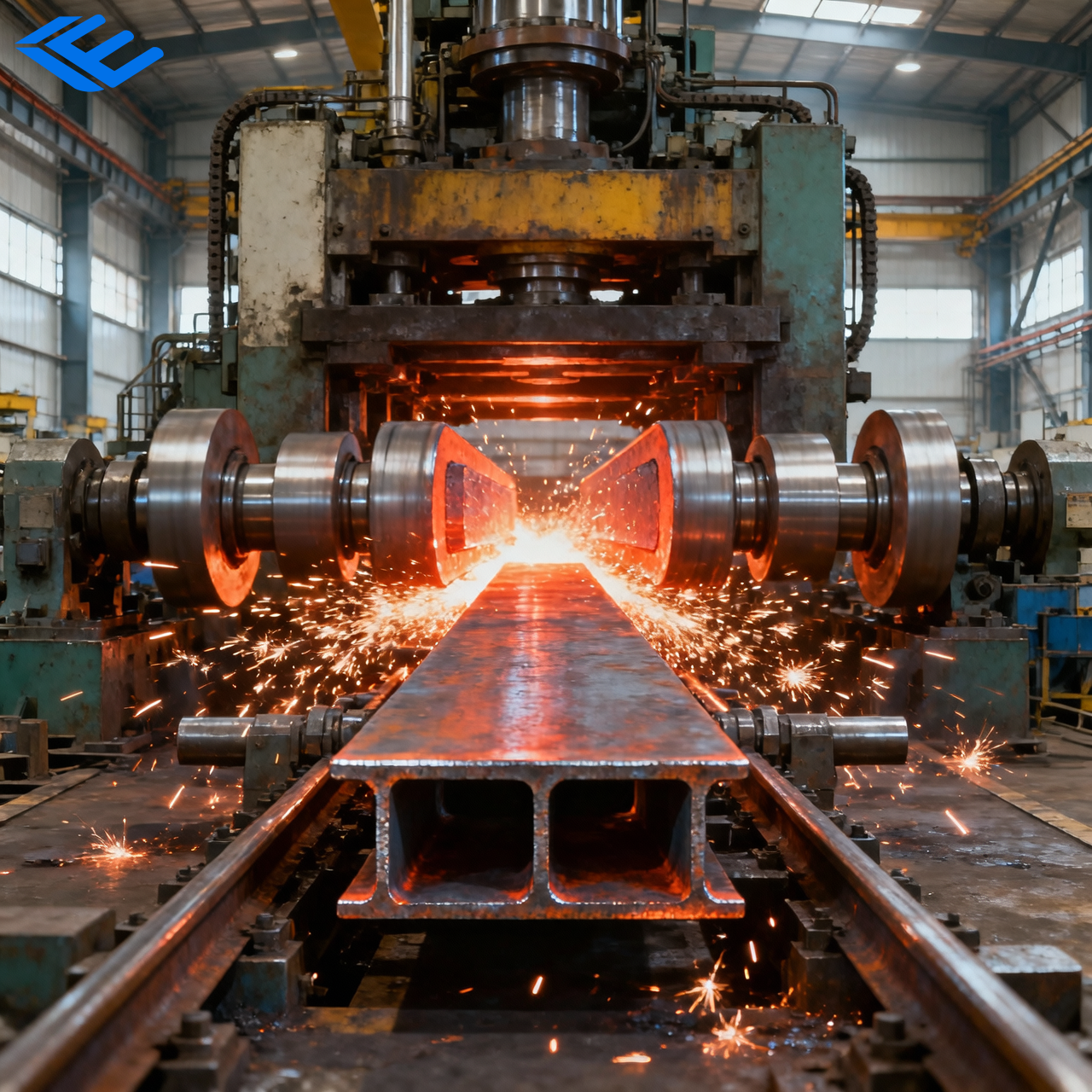
I. Basic Concepts and Applications of H-beams H-beams are named for their cross-sectional shape resembling the letter "H." They possess advantages such as high bending strength, light weight, and convenient construction, and are widely used in large steel structure projects such as high-rise buildings, industrial plants, and bridges. Based on the flange width and web height, H-beams can be divided into three categories: wide flange (HW), medium flange (HM), and narrow flange (HN), to meet different load-bearing requirements.
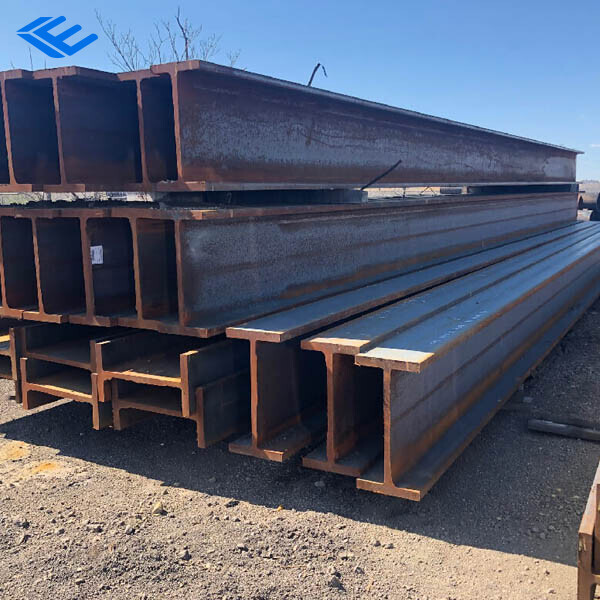
II. Production Process of H-beams
1. Steelmaking and Continuous Casting
The raw materials for H-beams are mainly molten iron or scrap steel, which are smelted into molten steel in a converter or electric arc furnace, and then cast into rectangular or irregularly shaped billets using a continuous casting machine. The dimensions of the continuously cast billets are typically 150mm×150mm to 400mm×400mm, and the length can reach over 12 meters to ensure subsequent rolling efficiency.
2. Heating and Rolling
The continuously cast billet needs to be heated to approximately 1200℃ to improve its plasticity. Hot rolling consists of two stages: roughing and finishing rolling:
- Roughing: The billet is initially shaped using a universal rolling mill, forming a shape close to an H-shape.
- Finishing: Multiple rolling passes are used to precisely control the thickness of the flanges and web. For example, the web thickness can be controlled between 6-40mm, and the flange thickness between 8-60mm (refer to GB/T 11263-2017 standard).
3. Cooling and Straightening: After rolling, the H-beams need to be water-cooled or air-cooled to room temperature, and then straightened to eliminate bending deformation. The straightening accuracy must meet the requirement that the deviation within each meter of length does not exceed 1mm.
4. Cutting and Inspection: According to customer requirements, steel is cut into fixed lengths (usually 6-12 meters) using flame cutting or sawing equipment, and quality inspections such as ultrasonic flaw detection and dimensional measurement are carried out.
III. Comparison of Different Production Methods
1. Traditional Hot Rolling Method: Suitable for mass production, low cost but poor dimensional flexibility.
2. Welding Forming Method: Steel plates are welded into H-shapes, suitable for non-standard sizes, but the weld seam may affect strength.
IV. Quality Control and Industry Standards
H-beams must conform to standards such as GB/T 11263 (China), JIS G3192 (Japan), or ASTM A6 (USA). Tensile strength is typically 235-460 MPa, and yield strength is not less than 195 MPa. During production, regular sampling and testing of chemical composition and mechanical properties are required to ensure product reliability.
Through the above process, H-beams can be produced efficiently and precisely, meeting the dual demands of modern construction for material strength and lightweighting.
Leave A Message
If you are interested in our products and want to know more details, please leave a message here, we will reply you as soon as we can.