


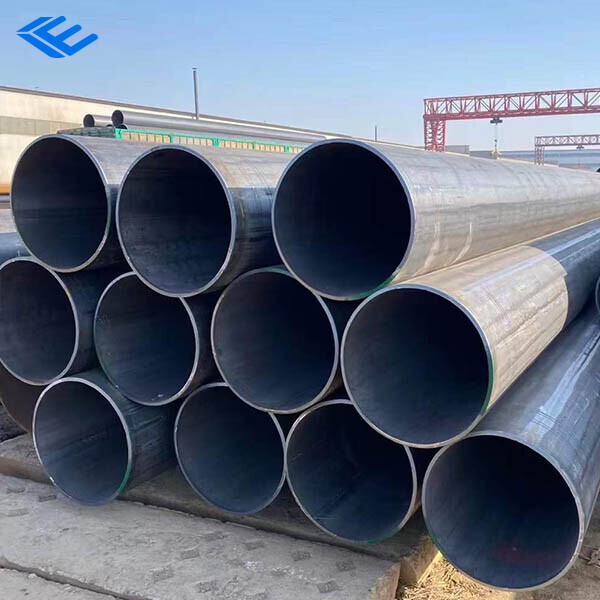
I. Hot-rolled seamless steel pipes
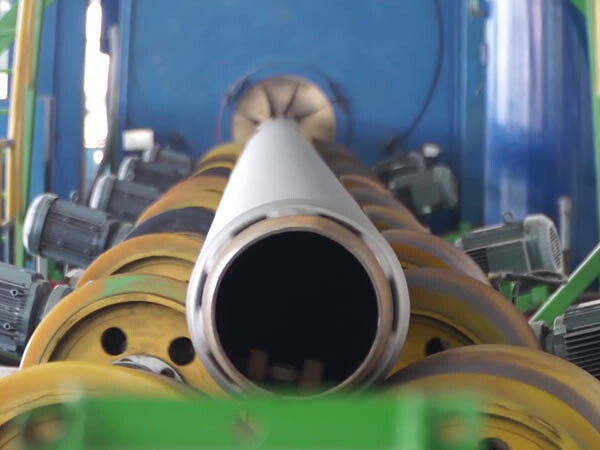
Principle: Hot-rolled seamless steel pipes are made from solid round steel billets as raw materials. After heating, they are rolled at high temperatures through piercing and rolling mills (such as automatic rolling mills, continuous rolling mills, and periodic rolling mills). Finally, they are manufactured through processes such as sizing, straightening, cooling, and inspection. The entire process is carried out above the recrystallization temperature of the steel.
Features:
Wide size range: Capable of producing large-diameter, thick-walled steel pipes.
High production efficiency: Suitable for mass production with relatively low cost.
Mechanical properties: High-temperature deformation during rolling results in a more uniform microstructure and good mechanical properties.
Surface quality: Surface typically has oxide scale, and the finish is not as smooth as cold-worked pipes.
Dimensional accuracy: Compared to cold-worked pipes, dimensional tolerances (especially wall thickness tolerances) are larger, and wall thickness uniformity is relatively poor.
Applications: Widely used in fields where dimensional accuracy requirements are not high, but strength, toughness, and pressure resistance are required, such as fluid transportation pipelines (water, oil, gas), structural pipes, and medium and low pressure boiler tubes.
II. Hot-expanded seamless steel pipes
Principle: "Hot expansion" is not typically a standalone steel pipe production method, but rather a secondary processing technique for existing steel pipes (usually hot-rolled seamless pipes). The principle involves heating the steel pipe to a certain temperature, then applying internal pressure using a pipe jacking machine or expanding machine, or using other expanding tools, to increase the pipe's diameter while simultaneously reducing the wall thickness.
Characteristics:
Main Purpose: To obtain steel pipes with larger diameters, especially large or ultra-large diameter pipes that cannot be directly produced by conventional hot rolling, or for producing non-standard sizes.
Wall Thickness Change: The wall thickness decreases during the expansion process; therefore, sufficient wall thickness must be reserved when selecting the original pipe material.
Surface Quality and Precision: The inner and outer surfaces of the expanded steel pipe may not be as smooth as the original pipe material, and dimensional accuracy may also decrease, especially in terms of wall thickness uniformity.
Flexibility: Existing specifications of steel pipes can be expanded to the required size according to market demand, improving production flexibility. Applications: Primarily used for large oil and gas pipelines, or structural pipes and fluid transport pipes requiring special large diameters, typically sizes that cannot be directly achieved in one step by hot rolling.
III. Cold-rolled seamless steel pipes
Principle: Cold-rolled seamless steel pipes are processed at room temperature from hot-rolled (or hot-expanded) tube blanks. The main cold working methods are cold rolling and cold drawing.
Cold rolling: The tube blank is passed through a cold rolling mill, and the outer diameter and wall thickness are reduced simultaneously by the squeezing and rotation of the rolls, with or without a mandrel.
Cold drawing: The tube blank is drawn through a die hole, reducing both its outer diameter and wall thickness simultaneously.
Features:
High dimensional accuracy: After cold rolling or cold drawing, the inner and outer diameters and wall thickness tolerances of the steel tube can achieve very high precision, far superior to hot-rolled tubes.
Good surface finish: The surface is free of oxide scale, resulting in a high degree of smoothness, especially for precision-rolled tubes that have undergone bright heat treatment.
Improved mechanical properties: Cold work hardening increases the strength and hardness of the steel tube, but reduces its plasticity and toughness (usually requiring subsequent heat treatment to restore these properties).
Good wall thickness uniformity: Through precise die and roll control, wall thickness uniformity is significantly improved.
Small-diameter thin-walled tubes: Enables the production of small-diameter, extremely thin-walled steel tubes that cannot be produced by hot rolling.
Applications: Widely used in fields with strict requirements for dimensional accuracy, surface quality, and mechanical properties, such as hydraulic system pipes, pneumatic system pipes, automotive parts, precision mechanical structures, heat exchangers, and instrument pipes.
Summary and Connection
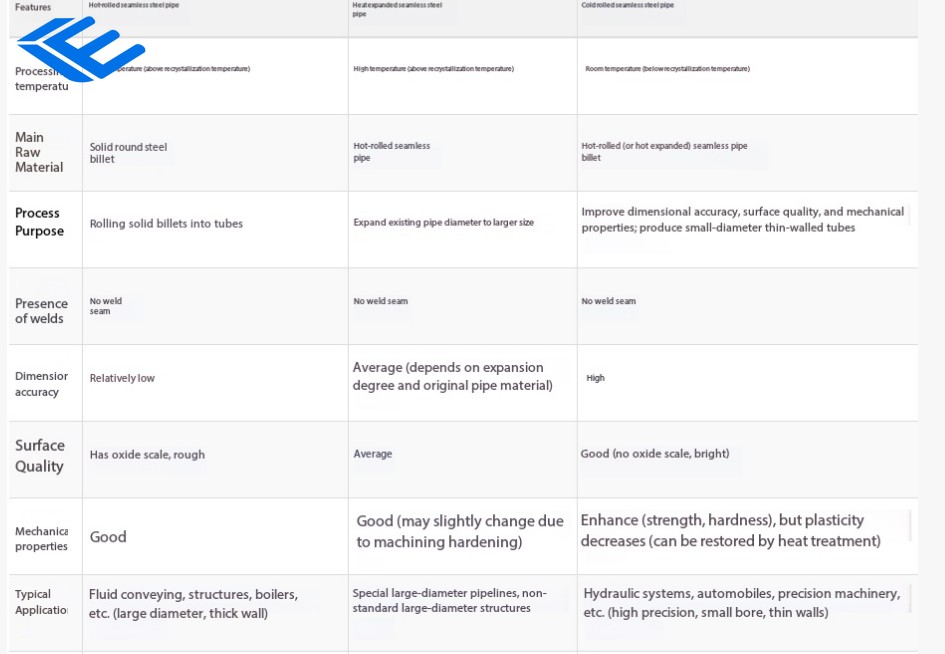
These three processes are often used in combination in the production of seamless steel pipes, for example:
Large-diameter pipes are produced by hot rolling, and then hot expansion is carried out to obtain non-standard pipes with even larger diameters.
Hot rolling produces tube blanks of standard sizes, which are then cold rolled or cold drawn to obtain high-precision seamless steel tubes with high surface quality.
Hot-rolled, hot-expanded, and cold-rolled seamless steel pipes are three crucial processing techniques in the production of seamless steel pipes, each with its own unique principles, characteristics, and application range.
Let's now go through these processes in more detail:
I. Hot-rolled seamless steel pipes
principle
The production of hot-rolled seamless steel pipes begins with a solid round steel billet. The billet is heated to a high temperature (usually between 1100°C and 1300°C, which is above the recrystallization temperature of steel) to give it good plasticity. Then, on a piercing mill (most commonly the Mannesmann skew rolling piercing mill), the solid steel billet is pierced into a hollow tube (or rough tube) by the rotation of the rolls and the pushing action of the mandrel.
The tube is then rolled into various tube rolling mills (such as automatic tube rolling mills, continuous tube rolling mills, periodic tube rolling mills, etc.). Through the cooperation of a series of rolls and mandrels, the outer diameter and wall thickness are further reduced and the length is extended to finally form the required steel tube size. After rolling, the steel tube also needs to go through processes such as sizing, cooling, straightening, and cutting off the head and tail, and finally be inspected and put into storage.
Features
Wide Production Range:** Hot rolling technology can produce large-diameter, thick-walled seamless steel pipes, an advantage unmatched by other processes.
High Production Efficiency:** High degree of automation, suitable for large-scale continuous production, resulting in relatively low unit production costs.
Mechanical Properties:** During high-temperature rolling, the steel grains are refined, and the internal structure is more uniform and dense. Therefore, hot-rolled pipes typically possess excellent mechanical properties (such as strength and toughness).
Surface Quality:** Due to high-temperature processing, a layer of iron oxide scale forms on the surface of the steel pipe. This scale is difficult to remove after cooling, resulting in a relatively rough surface compared to cold-worked pipes.
Dimensional Accuracy:** Due to thermal expansion and contraction and limitations inherent in the rolling process, the dimensional tolerances of hot-rolled pipes are relatively large, especially in terms of wall thickness uniformity, which may not be as good as that of cold-worked pipes.
Applications
Primarily used in applications where dimensional accuracy and surface finish requirements are not high, but strength and pressure resistance are essential. Examples include:
Fluid Transportation: Pipelines for transporting media such as oil, natural gas, water, and steam.
Structural Applications: Structural supports for bridges, buildings, and machinery.
Boiler Tubes: Tubes for medium and low-pressure boilers, capable of withstanding certain pressures and temperatures.
Petrochemical Industry: General pipelines used in oil refining and chemical plants.
II. Hot-expanded seamless steel pipes
principle
Hot expansion (or hot diameter expansion) is not an independent seamless steel pipe production method, but a process of secondary processing of existing steel pipes (usually hot-rolled seamless pipes as the base pipe) with the aim of increasing the diameter of the base pipe to a larger size.
The specific process is usually as follows: the seamless steel pipe (main pipe) produced by hot rolling is reheated to the plastic deformation temperature, and then radial force is applied inside the steel pipe by a pipe jacking machine or a diameter expander (commonly hydraulic diameter expander, conical die diameter expander, etc.) to expand its diameter. During the diameter expansion process, since the metal volume remains basically unchanged, the wall thickness of the steel pipe will be reduced accordingly, and the length will also be shortened.
Features
Highly targeted: It is specifically designed for the production of large-diameter, non-standard-sized seamless steel pipes that are difficult to produce directly using conventional hot rolling processes, filling a gap in production dimensions.
Flexible production: We can expand the diameter of standard-sized steel pipes in stock according to temporary market or project needs, thus shortening the supply cycle.
Wall thickness variation: Expansion will lead to a reduction in wall thickness. Therefore, sufficient initial wall thickness must be considered when selecting the mother tube. The uniformity of wall thickness after expansion may not be as good as that of the original hot-rolled tube.
Surface quality: Similar to hot-rolled pipes, the surface may still have oxide scale, and the smoothness is generally average.
Economic efficiency: Compared to investing in new equipment specifically for producing large diameter products, thermal expansion is more economical for small batches or special needs.
application
Large-diameter pipelines: Especially ultra-large diameter oil and gas pipelines.
Structural components: Large structures, supports, and other applications requiring large-diameter steel pipes.
Non-standard pipes: Large-diameter specifications that are not commonly used in the market or require customization.
III. Cold-rolled seamless steel pipes
principle
Cold-rolled seamless steel pipes are produced by further processing hot-rolled (or hot-expanded) tube blanks at room temperature. The main purpose is to obtain higher dimensional accuracy, better surface quality, and superior mechanical properties.
There are two main methods of cold processing:
Cold rolling: Hot-rolled (or hot-expanded) steel pipes are passed through a cold rolling mill. Cold rolling mills usually use a two-roll or multi-roll cyclic rolling method. Under the squeezing action of the rolls, the outer diameter and wall thickness of the steel pipe are reduced at the same time, and the length is extended.
Cold drawing: After hot-rolled (or hot-expanded) steel pipes (or rough pipes) undergo pickling, phosphating and saponification, they are drawn through a drawing die. Under the action of the drawing force, the steel pipe passes through a die hole smaller than its outer diameter, thereby achieving diameter reduction and wall reduction.
After cold working, steel pipes undergo work hardening, which increases their strength and hardness but decreases their plasticity and toughness. Therefore, heat treatments such as annealing, normalizing, or quenching and tempering are usually required to eliminate internal stress, restore plasticity and toughness, and adjust mechanical properties.
Features
High dimensional accuracy: Cold rolling/cold drawing processes can strictly control the inner and outer diameters and wall thickness tolerances of steel pipes, achieving very high precision requirements, far exceeding those of hot-rolled pipes.
Excellent surface quality: The surface is free of oxide scale, smooth, and bright; for precision bright tubes, it can even achieve a mirror-like effect.
Improved mechanical properties: Cold working itself increases the strength and hardness of the steel (work hardening), and subsequent heat treatment can achieve even more ideal comprehensive mechanical properties.
Good wall thickness uniformity: Cold working provides strong control over wall thickness, significantly improving wall thickness uniformity.
Small-diameter thin-walled tubes: Enables the production of small-diameter, extremely thin-walled precision steel tubes that are difficult to manufacture using hot rolling processes.
application
Fields with stringent requirements for dimensional accuracy, surface quality, and mechanical properties include:
Hydraulic systems: cylinder bodies and piston rods for precision hydraulic components such as hydraulic cylinders and pneumatic cylinders.
Automotive manufacturing: Key components such as automotive drive shafts, shock absorbers, and steering systems.
Precision machinery: Various high-precision mechanical parts, bearing sleeves, and instruments.
Heat exchangers: Heat exchange tubes requiring uniform wall thickness and smooth internal and external surfaces.
Medical devices: Stainless steel tubes requiring high cleanliness.
These three processes are often interconnected and complementary in actual production. Hot rolling is the foundation of seamless steel pipe production, providing rough-processed pipes; hot expansion expands the size range of hot-rolled pipes; while cold rolling or cold drawing is for obtaining final products with higher precision and better performance.
Leave A Message
If you are interested in our products and want to know more details, please leave a message here, we will reply you as soon as we can.